
Can You Dab Distillate? What You Should Know
Dabbing is a popular method of consuming cannabis concentrates through a dab rig, using vapor rather than combustion. Because this method involves highly concentrated materials, it often raises questions about strength, suitability, and how different extracts perform when heat is applied. One extract that frequently comes up in this context is cannabis distillate.
Cannabis distillate is a highly refined extract that isolates specific cannabinoids, such as THC or CBD. In dabbing applications, its purity and potency lead many people to question whether it behaves differently from other concentrates.
In this article, we explore whether distillate can be dabbed, how it behaves during vaporization, and what factors matter most when evaluating it for dabbing.
What Is Cannabis Distillate for Dabbing?
In dabbing applications, cannabis distillate refers to a highly refined extract valued for its purity and consistency. Most plant compounds are removed during processing, leaving isolated cannabinoids. This level of refinement makes it easier to evaluate potency, behavior under heat, and performance when used through a dab rig.
These are the main aspects that shape how distillate behaves compared to other dabs.
How Distillate Is Made
Distillate is created through a multi-stage refinement process that separates cannabinoids from plant material and impurities. After initial extraction, the oil undergoes distillation, often using short-path distillation, to isolate targeted compounds such as THC or CBD.
This additional refinement step results in a clear and stable extract with predictable cannabinoid levels.
THC vs CBD Distillate
THC distillate contains tetrahydrocannabinol and produces psychoactive effects, while CBD distillate contains cannabidiol and does not cause intoxication. From a dabbing perspective, both forms share similar texture and purity, but they serve different use cases depending on desired effects and regulatory considerations.
This distinction also allows formulators to choose the THC level that best fits specific product goals.
How It Differs From Other Dabs
Distillate differs from many other dabs because it focuses on isolated cannabinoids rather than full-spectrum plant profiles. Other concentrates often retain terpenes, lipids, and minor compounds, which can introduce natural variation in flavor and behavior.
By contrast, distillate emphasizes uniformity. This consistency supports more predictable vaporization, steadier performance, and easier comparison across batches, which explains its distinct role among dabbing concentrates.
How Distillate Fits Into Dabbing
In dabbing applications, distillate often raises questions because it looks and behaves differently from many cannabis concentrates. Its high purity and consistency lead people to wonder whether it works well for dabbing and what sets the experience apart from other dabs.
Why Distillate Works for Dabbing
Distillate works for dabbing because it contains a highly refined and concentrated cannabinoid profile. During processing, most plant material, waxes, and impurities are removed, which allows the extract to vaporize cleanly when exposed to heat.
In some setups, users may dab distillate from a syringe, which reflects how its uniform texture supports controlled handling compared to less refined concentrates.
This refinement creates a more predictable outcome compared to less processed concentrates. From a formulation and performance standpoint, distillate typically offers:
Consistent cannabinoid concentration
Minimal variation between batches
Fewer unwanted residues
These traits help explain why distillate is often considered in controlled vaporization contexts.
How It Behaves When Heated
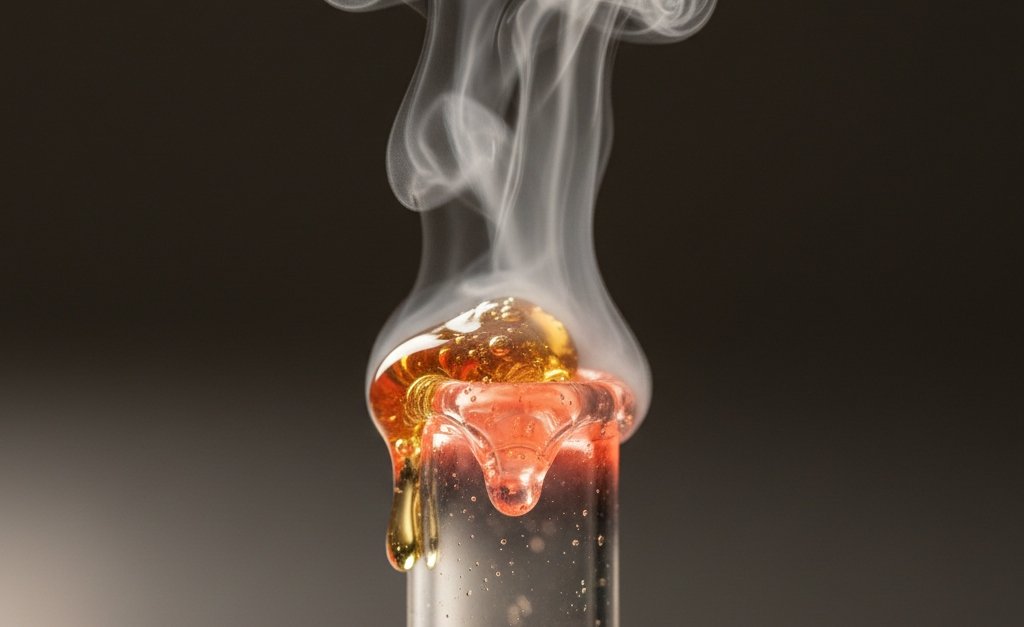
When heat is applied during dabbing, distillate transitions quickly from a viscous liquid into vapor. Because distillate is already decarboxylated during processing, its cannabinoids are in their active form before dabbing. Heat in this context vaporizes the cannabinoids rather than activating them. This is why temperature control plays an important role in maintaining consistency and preventing degradation.
If heat is poorly managed, cannabinoids may degrade instead of vaporizing evenly. Under well-controlled conditions, distillate commonly shows:
Smooth and steady vapor formation
Reduced residue compared to less refined extracts
Predictable performance across uses
This reliability supports its role in more standardized dabbing setups.
How Strong Is Dabbing Distillate?
Distillate is known for its strength, which often raises concerns for those unfamiliar with highly refined cannabis extracts. This becomes more apparent when typical potency ranges are considered.
Typical THC Levels
THC distillate commonly contains a much higher cannabinoid concentration than cannabis flower or many traditional concentrates. Refinement removes most non cannabinoid material, which allows THC levels to remain consistently elevated.
In regulated production environments, distillate potency often falls within a defined range that supports labeling accuracy and formulation control. This consistency helps explain why distillate strength feels more noticeable and why measured production standards matter. Common characteristics include:
High and uniform THC concentration
Minimal fluctuation between batches
Predictable output across product formats
Why Effects May Feel More Intense
The intensity associated with distillate relates more to concentration than to the method itself. Because distillate contains fewer secondary compounds, cannabinoids are delivered in a more direct form.
This can lead to faster onset and clearer effects compared to less refined extracts. A common misconception is that distillate is harsher, when in reality the sensation often reflects its purity and strength rather than combustion or additives. Controlled processing helps reduce variables that could otherwise alter the experience.
Tolerance and Experience Level
Individual tolerance plays a significant role in how distillate strength is perceived. People with limited exposure to high-potency products may notice stronger effects than expected, even when exposure remains controlled.
Experience level, frequency of use, and personal sensitivity all influence response. This is why consistency in production matters. Reliable potency allows users and manufacturers alike to anticipate outcomes more accurately. Awareness of tolerance supports responsible selection and avoids surprises associated with high-strength extracts.
When Distillate Works Well and When It Does Not
In dabbing contexts, distillate offers clear advantages, but its refined nature also comes with limitations. A clear view of both sides helps avoid common misconceptions and supports a more informed evaluation of this concentrate format.
High Purity and Potency
Distillate is valued for its high level of refinement, which removes most plant material and leaves a concentrated cannabinoid profile. This purity supports consistency and predictability, especially when uniform performance matters.
From a technical standpoint, high potency allows precise formulation and repeatable outcomes. At the same time, strength does not always equal suitability. Compared to less refined concentrates, effects may feel stronger, which makes awareness and context important.
Flavor Customization
During distillation, many natural flavor compounds are separated from the cannabinoids. This allows specific terpenes to be reintroduced in controlled amounts.
Beyond flavor, terpenes are often selected for their aromatic characteristics and how they shape the overall experience. Formulation choices can influence taste, aroma, and perceived effects depending on how the terpene profile is designed.
Risk of Overconsumption
Because distillate contains a concentrated cannabinoid profile, effects may feel stronger than anticipated when potency is underestimated. This can lead to overconsumption, particularly in dabbing scenarios.
The concern lies less with the extract itself and more with awareness around concentration. Consistent production standards help reduce uncertainty by ensuring predictable cannabinoid levels, which supports more responsible selection and use.
Not Ideal for Beginners
Distillate may not be the best starting point for individuals with limited experience around high-potency cannabis products. Its refined nature removes many of the moderating compounds present in full-spectrum extracts.
Without those compounds, effects can feel more direct and intense. Beginners often benefit from formats that offer broader cannabinoid profiles and a gentler introduction. Recognizing this difference helps set realistic expectations and supports safer choices.
Distillate vs Other Cannabis Concentrates
Cannabis concentrates vary widely in how they are refined, handled, and scaled in production. A comparison between distillate and other concentrate types helps clarify why different formats suit different manufacturing goals and product strategies.
Distillate vs Live Resin
The main difference between distillate and live resin lies in refinement. Distillate goes through multiple processing stages that remove most plant compounds, while live resin preserves more natural elements from the original plant.
This difference affects consistency. Live resin may vary between batches due to natural material, whereas distillate offers greater uniformity. From a manufacturing perspective, distillate supports repeatable outcomes and easier process control, while live resin prioritizes plant-specific characteristics over standardization.
Distillate vs Wax or Shatter
Wax and shatter differ from distillate mainly in texture and structural stability. These concentrates often have semi-solid or brittle forms that can change with temperature and handling conditions.
Distillate remains more stable and predictable during processing, which simplifies storage and transfer within production environments. Batch uniformity also tends to be higher with distillate, reducing variation across production runs and supporting consistent formulation when scale and repeatability are priorities.
Full Spectrum vs Isolated Cannabinoids
Full-spectrum extracts retain a wider range of cannabis compounds, while isolated cannabinoids focus on specific targets such as THC or CBD. This distinction affects both formulation and performance.
Isolated cannabinoids offer greater predictability because fewer variables remain in the extract. This makes them easier to measure, blend, and standardize. In controlled production settings, isolated formats like distillate often support clearer workflows and more reliable output across product lines.
Safety and Quality Factors When Dabbing Distillate
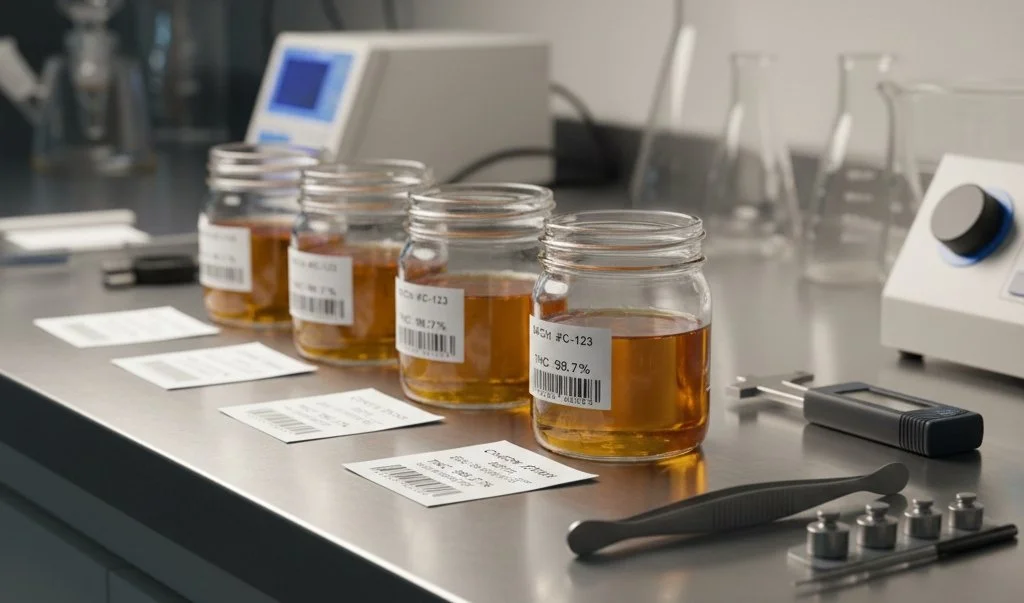
When dealing with highly refined extracts like distillate, safety and quality often become the biggest concerns. Many people worry about potency accuracy, hidden contaminants, or assume that distillate is harmful by default.
In reality, these concerns usually relate to sourcing, testing, and process control rather than the extract itself.
Importance of Lab Testing
Lab testing helps confirm what a distillate contains and what it does not. Verified results reduce confusion around potency and provide confidence in product consistency.
Testing also supports transparency and compliance by confirming cannabinoid levels and screening for unwanted substances. Reliable reports typically cover:
Cannabinoid concentration accuracy
Residual solvent presence
Pesticide and contaminant screening
These checks help ensure distillate meets quality expectations before it enters any production or formulation process.
Storage and Stability
Proper storage plays a key role in maintaining distillate quality over time. Some operators purchase distillate and ration it across longer production cycles, which makes consistency in storage conditions especially important. Stable temperature, sealed containers, and limited exposure help preserve intended characteristics.
Choose Reputable Products
Product quality often reflects the standards followed by the producer. Reputable sources typically provide clear documentation and prioritize consistency over volume.
Selecting well-sourced distillate reduces risk and supports reliable outcomes. Key indicators of reputable products include:
Transparent lab reports
Clear sourcing information
Consistent cannabinoid labeling
These factors help guide more confident decisions and reduce uncertainty when working with refined cannabis extracts.
Distillate Dabbing with Consistency and Accuracy
Distillate can be dabbed, but its refined nature makes understanding its behavior essential. Purity, potency, and consistency shape how it performs compared to other concentrates. When these factors are clear, expectations stay realistic, and decisions feel more informed rather than uncertain.
As distillate production scales, many teams worry about inconsistency, quality drift, and losing control over repeatability. At Sorting Robotics, we help address these concerns with automation systems built for consistency, precision, and scalable production. Our solutions focus on reducing variability and strengthening process control across distillate handling, formulation, and packaging workflows.
For teams looking to scale without losing control, Sorting Robotics offers automation built around consistency and precision.Get in touch with us now!
Frequently Asked Questions
Does Distillate Perform the Same Across Different Dabbing Devices?
Distillate can behave differently across devices because each setup manages heat and airflow in its own way. While the extract itself stays consistent, variations in equipment design may influence vapor quality, smoothness, and overall performance.
Why Does Distillate Sometimes Look Thicker or Thinner?
Changes in appearance usually relate to temperature and formulation, not quality. Distillate may look thicker in cooler conditions and thinner when warm. These visual shifts are normal and do not indicate changes in potency or purity.
Does Distillate Lose Quality Over Time Even If It Is Not Used?
Over time, exposure to light, heat, or air may slowly affect distillate stability. When stored under controlled conditions, quality typically remains stable for long periods, though gradual changes can still occur with extended storage.
Is Distillate Always Made the Same Way Across Producers?
While the core distillation concept remains consistent, production methods can vary between producers. Differences in equipment, process control, and quality standards may influence final consistency, clarity, and overall reliability of the distillate.
Can Distillate Quality Vary Even With Similar THC Percentages?
Yes, similar THC levels do not always mean equal quality. Factors such as refinement depth, residual compounds, and process consistency can affect how distillate performs, even when potency percentages appear nearly identical.