
How Automation Impacts Product Launch Timelines in Cannabis Brands
Launching a new cannabis product can feel like running a race with your shoes tied together. Teams work hard, but manual steps and slow handoffs often stretch timelines and make it tough to get products out on time.
The legal cannabis market is growing rapidly and is expected to reach around $102.1 billion by 2030, driven by rising legalization and demand for new cannabis products. Brands that can move faster are more likely to capture opportunities in this expansion.
In this guide, you will see how automation can help shorten product launch timelines and give your brand an edge in a crowded and fast-moving market.
Why Cannabis Brands Struggle to Launch New Products on Time
A new cannabis product should create excitement, but many brands feel pressure instead. Tight retail windows, strict regulations, and growing product lines all compete for attention. Teams try to move quickly, but the demands of today's cannabis market make it harder to keep every launch on track.
These are the main challenges that make it harder to keep launches on schedule.
More Products and Packaging Options to Manage
Most cannabis brands now sell many versions of each product. A single flower or pre-roll can come in different strains, strengths, and package sizes. Each variation needs its own label, packaging, and records. As the number of options grows, so does the amount of coordination required before a product can reach the market. . To manage this complexity, many companies look for a robotics integration roadmap from pilot to full production.
Stricter Rules for Tracking and Compliance
Cannabis is highly regulated, and every product must follow detailed tracking and labeling rules. Test results, batch numbers, and package information must line up exactly. When teams work to meet these requirements, extra time is often spent checking and updating records before products receive approval to move forward.
Retailers Expect Faster and More Reliable Delivery
Dispensaries want new products on their shelves as soon as demand starts to rise. Late deliveries can mean missed sales or lost shelf space. Retailers also need accurate timelines to plan promotions and manage stock, which adds more pressure on brands to meet their launch dates.
Manual Work Creates Extra Pressure on Teams
Many cannabis operations still depend heavily on manual work. Staff juggle many tasks at once, from handling products to updating records. As volume increases, this puts more strain on teams and makes it harder to keep launches moving smoothly without delays. Transitioning from manual vs automated packing 2025 standards is often the only way to keep launches moving smoothly.
Do smaller cannabis brands face more launch pressure than larger ones?
Yes, smaller cannabis brands usually feel more pressure because they have fewer staff, less buffer for delays, and limited shelf space. Even a short delay can affect cash flow, retailer trust, and their ability to compete with larger brands.
Where Cannabis Production Slows Down Before Launch
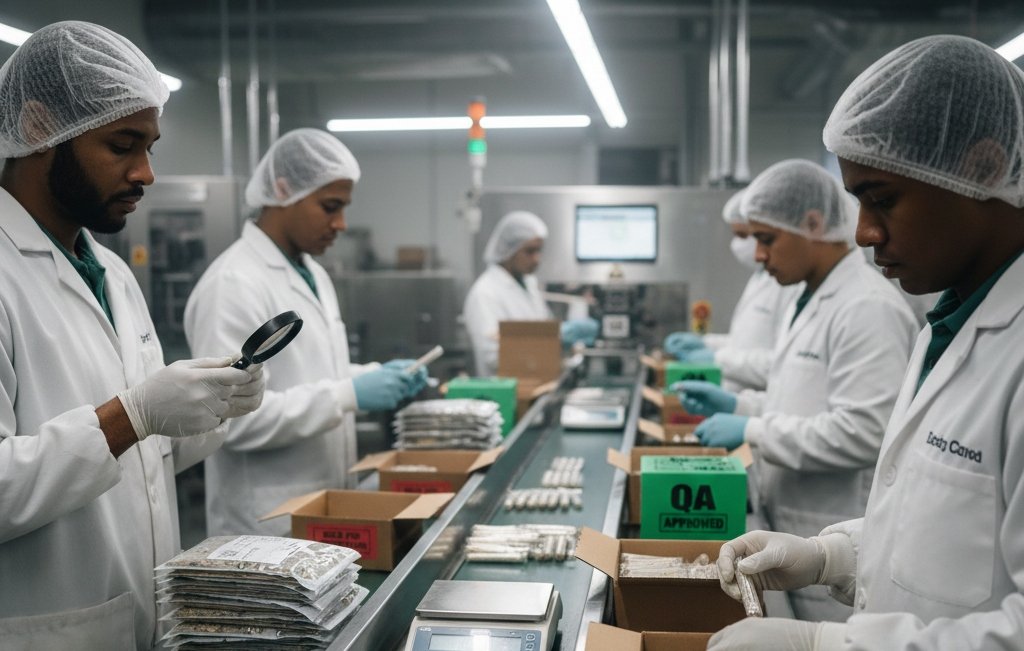
Even after a product gets approval to move forward, it can still hit roadblocks inside the facility. Small pauses at different steps add up and push launch dates back. These slowdowns usually occur in parts of the process that depend on people, paperwork, and manual checks rather than on steady, repeatable systems.
Here is where cannabis production loses time before launch.
Manual Sorting and Grading Delays
After harvest, flowers and other products go through sorting and quality checks. When this work is done by hand, speed varies from shift to shift. Uneven review time slows product movement and often creates backups before packaging begins.
Packaging and Weight Control Errors
Every package must meet specific weight and presentation standards. Slight differences in fill levels or product appearance may indicate that a package needs to be reopened and corrected. Each time that happens, the line slows down. These minor fixes pile up near shipping time, putting extra pressure on delivery schedules. You can improve packaging accuracy with pick and pack robots to ensure these minor fixes don't pile up near shipping time.
Labeling, Compliance, and Batch Tracking
Before a product can leave the facility, labels and tracking records must match exactly. If a batch number, test result, or package count looks wrong, teams have to pause and double-check everything. These checks protect compliance, but they also hold products in place until all the details line up.
Labor Shortages and Training Time
Cannabis production depends on trained staff, but turnover and shift changes are common. New workers need time to learn the process, which slows production. When key roles go unfilled, even experienced teams struggle to keep launch timelines on track.
How Automation Reduces Delays in Cannabis Product Launches
When teams try to push more product through production, the pace of work becomes critical. Automation does not magically fix timelines, but it helps move work steadily and predictably. When machines take over repetitive or precise tasks, products can move through key steps with fewer interruptions and hold-ups than manual work alone.
According to research, AI and machine learning are increasingly used in the cannabis industry to provide real-time quality control and predictive insights that support efficient workflows and product consistency.
Here's how automation helps keep production moving without constant stops.
Steady Product Flow From Processing to Packaging
Automation keeps the product moving through sorting and inspection more smoothly than manual steps alone. Machines and vision systems can handle the same task repeatedly without breaks, reducing idle time on the line. This steadier flow helps products reach packaging sooner and reduces the stop-and-start rhythm that usually slows manual workflows.
Fewer Production Errors and Fewer Holdups
Repetitive manual tasks often lead to small mistakes that slow production. Automated systems complete these tasks with consistent precision, reducing rework and keeping products moving forward without unnecessary pauses.
Multiple Production Steps That Run at the Same Time
Instead of working in a strictly step-by-step order, machines can handle several tasks at once or in close succession. For example, while one machine feeds products into the next stage, another can inspect or sort those just fed in. This kind of parallel handling keeps more work moving through the line at the same time, reducing wait time between steps and shortening the overall time from processing to launch.
How Automation Becomes Part of Cannabis Production
Automation does not sit on the side of cannabis operations. It becomes part of everyday production. Instead of replacing teams, automated systems work alongside people and existing equipment. They handle specific tasks inside the process, so work continues to move forward in a more organized and reliable way.
This is how automation becomes part of daily cannabis operations.
Post-Harvest Sorting and Quality Control
After harvest, cannabis products go through a quality check before they move forward. Automated vision systems can review products for size, shape, and visible defects. These systems support staff by giving consistent visual checks across every batch. Workers still oversee the process, but machines help apply the same standards to each product, which keeps quality checks more structured.
Packaging Line Integration
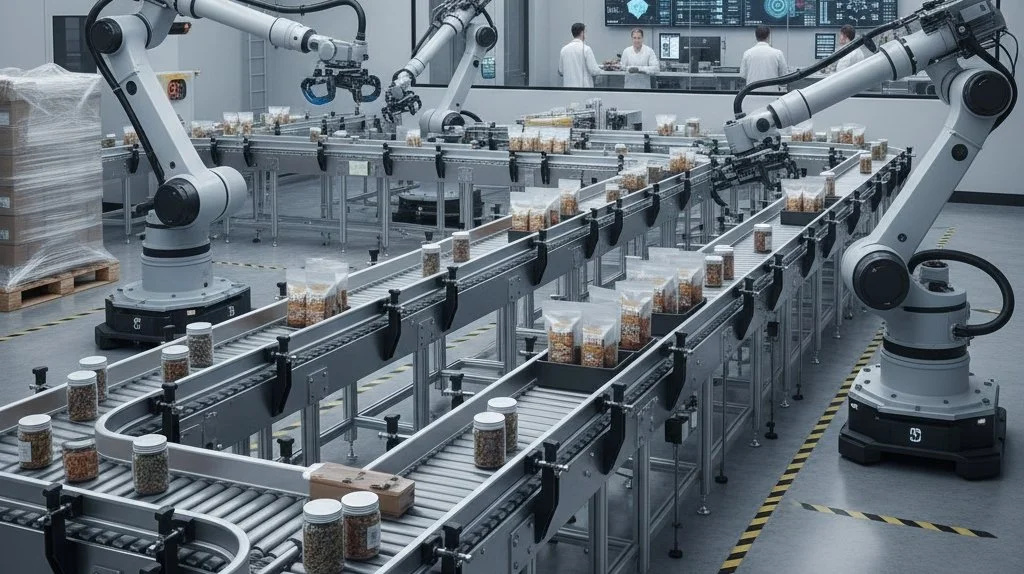
Automation connects directly to packaging equipment. Machines feed products into packagers, align items, and keep the line supplied at a steady rate. This setup allows packaging equipment to run without frequent interruptions. Teams can focus on supervision and adjustments while the system handles the constant movement of product from one step to the next.
Data Capture for Compliance and Reporting
Each batch of cannabis must be tracked as it moves through production. Automated systems record information such as batch numbers, weights, and inspection results during normal operations. This data flows into monitoring and reporting systems used for compliance and internal review. Teams can access accurate records without relying solely on manual data entry.
How Automation Changes the Cannabis Production Process
A side-by-side view helps make the difference easy to understand. Manual and automated setups both move products through the same steps, but the workflow in each system looks very different.
Manual Production Workflow
This is how cannabis production usually runs when most tasks depend on people and paper-based tracking.
Workers move products from one station to the next
Teams sort and check quality by hand
Staff weigh and package products one batch at a time
Labels and batch details get written or entered manually
Products wait when someone needs to fix a mistake
Each step depends on the previous one to finish
Delays at one point often slow down the rest of the line
Automated Production Workflow
This is how production looks when machines and software support the flow of products and information.
Machines feed products into the next stage of the line
Automated systems support sorting and inspection
Packaging equipment stays supplied at a steady pace
Batch data records as part of normal production
Fewer handoffs take place between steps
Teams monitor and adjust instead of moving every item
Product and data stay connected from start to finish
Does automation replace cannabis production workers or change their roles?
Automation usually changes roles rather than replacing people. Teams still run the operation, but instead of doing repetitive tasks by hand, workers focus on monitoring equipment, quality checks, and keeping production running smoothly.
How Faster Product Launches Strengthen Cannabis Brands
When a cannabis brand brings products to market on time, the impact goes far beyond daily operations. Faster launches affect revenue, retail relationships, and a brand's visibility in a crowded space. Brands that move quickly often gain more chances to grow, while others struggle to keep up.
These are the main ways faster launch cycles help cannabis brands stay competitive.
Faster Shelf Placement
Getting products to stores on time helps brands secure valuable shelf space. When a product arrives early, retailers can place it on display while customer interest is high. That first position on the shelf often leads to better sales and stronger awareness, especially in busy markets with many similar products.
Stronger Retailer Relationships
Retailers prefer to work with brands that meet their delivery promises. When products arrive as planned, stores can run promotions, restock on time, and avoid empty shelves. Over time, this reliability builds trust, making it easier for brands to secure repeat orders and better placement in-store.
More Room to Launch New Products
Smooth production and release cycles enable brands to introduce new products more frequently. Teams can roll out fresh strains, new formats, or updated packaging without creating long backlogs. This steady pace keeps the product lineup current and helps brands respond faster to changing customer preferences.
Greater Brand Visibility in a Crowded Market
Cannabis shelves fill up quickly, and new brands enter the market all the time. Companies that launch products on a regular schedule stay in front of customers more often. Frequent, well-timed releases make a brand easier to notice, which supports long-term recognition and growth.
How fast should a cannabis brand be able to launch a new product to stay competitive?
Most competitive cannabis brands aim to move from concept to shelf within a few months, not a whole year, so they can respond to trends, secure shelf space, and avoid losing momentum to faster-moving competitors.
Faster Cannabis Launches as a Brand Advantage
Getting new products to market on time is a key advantage for any cannabis brand. Automation helps teams work faster, reduce errors, and keep every batch on schedule. Tools like Stardust provide high-throughput kief coating, while Jiko and Jiko+ deliver precise pre-roll infusion.
Integrating these solutions into existing production lines removes bottlenecks, standardizes workflows, and keeps products moving smoothly from harvest to shelf. Faster, more reliable launches strengthen retailer trust, protect shelf space, and give your brand the visibility it needs to grow.
Explore Sorting Robotics solutions to see how your operation can achieve smoother launches, consistent quality, and predictable growth.
Frequently Asked Questions
What is the most common cause of launch delays in cannabis production facilities?
Most delays stem from minor issues piling up, such as manual handling, rework, and paperwork. When teams have to stop and fix weights, labels, or records, products often sit longer than planned.
Can automation help with cannabis compliance and record-keeping?
Yes, automation can record batch details, weights, and inspection results as part of normal production. This provides teams with more reliable data for compliance reporting and internal tracking.
Do automated systems work with existing cannabis packaging equipment?
In many cases, yes. Automated sorting and feeding systems are designed to connect to standard packaging lines, allowing facilities to add automation without replacing all their current equipment.
How can cannabis brands decide which parts of their operation to automate first?
Most brands start with tasks that cause the most delays or errors, such as sorting, weighing, or data entry. Focusing on these problem areas usually delivers the fastest improvement without major process changes.
How does automation affect consistency between batches?
Automation applies the same rules and settings to every batch, which helps reduce variation caused by manual handling. That means products tend to look, weigh, and sort more consistently from one batch to the next.