
What Is THC Powder? Inside Production and Use
Cannabis production today involves handling far beyond raw plant material. As formats continue to evolve, manufacturers now work with increasingly specialized cannabinoid inputs. One such format gaining attention within production environments is THC powder.
Unlike traditional cannabis forms, THC powder is handled as a defined material within structured manufacturing systems. Its role becomes clearer when viewed through formulation, measurement, and controlled integration rather than through consumer or retail framing.
This article examines what THC powder is and how it functions within structured cannabinoid production systems.
How THC Powder Differs from Other Cannabis Formats
As cannabis formats continue to expand, the differences between them often come down to processing methods and formulation approach. Understanding how THC powder compares to more familiar formats helps clarify where it fits within modern production workflows.
THC Powder vs. Kief
Kief is made up of trichomes that are mechanically separated from cannabis flower, typically through sifting or screening. It remains a plant-derived material and contains a mixture of cannabinoids, terpenes, and other natural compounds. In production settings, kief may also be used in applications such as coating processes, where it is applied using specialized kief-coated equipment.
THC powder, by contrast, is not mechanically separated plant matter. It involves additional extraction and refinement steps to isolate THC before converting it into a crystalline or powdered form. The primary distinction lies in processing level: kief is minimally processed, while THC powder undergoes further controlled processing before formulation use.
THC Powder vs. Traditional Edibles
Traditional edibles typically incorporate THC infused into fats such as oils or butter, since cannabinoids are naturally fat-soluble. These infusions are blended into baked goods, gummies, or similar products during preparation. An important step in this process is the decarboxylation of edibles, where heat is applied to activate cannabinoids before they are incorporated into food formulations.
THC powder differs in structure and handling. Rather than remaining in an oil-based format, it may be processed into a dry or crystalline state, sometimes referred to as THC crystal, which can then be measured and incorporated during formulation. While both formats are used in consumable products, their preparation methods and integration into production systems are distinct.
Are all THC powder formats the same in production?
No, not all THC powder formats are identical. Some products are highly purified crystalline isolates, while others are formulated powders designed for specific applications. Differences may exist in purity levels, processing steps, and how the material integrates into manufacturing systems.
How THC Powder is Produced
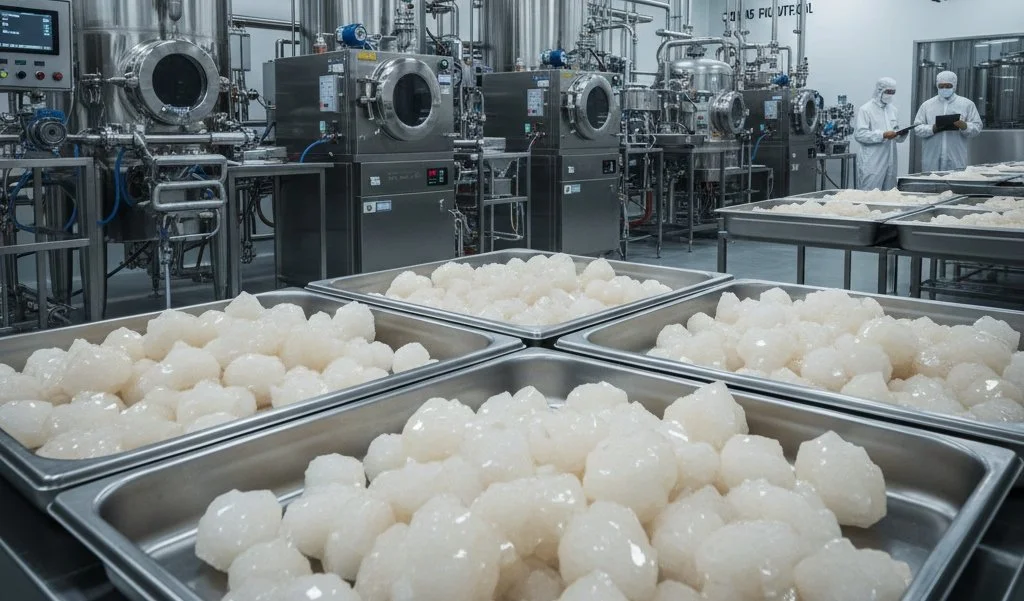
THC powder production follows a structured manufacturing process that focuses on purity, control, and consistency. Each stage ensures that the final material meets defined concentration standards and maintains stability for formulation and handling across regulated environments.
It is important to note that “THC powder” can refer to two distinct categories: highly purified crystalline THC isolate, and formulated powders created through nanoemulsion and drying technologies designed for dispersion in specific product systems.
The process follows three structured stages from extraction to final drying.
Cannabinoid Extraction
Production begins with THC isolated from plant material. Manufacturers use controlled extraction systems to separate cannabinoids from raw cannabis. Solvent-based or mechanical methods remove target compounds while limiting plant residue. The goal at this stage is a concentrated extract that contains cannabinoids along with minor natural components.
Refinement and Purification
The extract then moves through refinement to remove fats, waxes, and residual solvents. Filtration and controlled purification steps improve clarity and chemical stability. Accurate measurement ensures consistent cannabinoid concentration. This consistency supports predictable formulation, dosing accuracy, and reliable downstream processing.
Converting THC into Powder Form
After purification, THC may either crystallize into a solid isolate or be formulated into a powder through controlled emulsion and drying processes. In isolated production, controlled temperature conditions allow THC to crystallize into solid structures. In emulsion-based systems, liquid cannabinoid formulations are spray dried or otherwise processed to create fine, dispersible particles. Emulsion-based drying methods create uniform dispersion that supports stable and measurable powder production.
Manufacturing Considerations in THC Powder Production
THC powder production requires strict manufacturing control to maintain safety, accuracy, and repeatability. Small variations in concentration or handling can affect formulation performance. For this reason, structured production systems and controlled environments play a central role throughout the process.
Several operational factors directly influence reliability and product consistency.
Consistency and Batch Control
Consistency begins with uniform raw material and controlled processing conditions. When temperature, humidity, and equipment settings remain stable, the output remains predictable. That predictability allows each batch to match the intended cannabinoid concentration. Standardized environments support repeatability, which helps manufacturers maintain uniform product quality over time.
Precision In Measurement and Handling
Once consistency is established, precise measurement becomes equally important. THC concentration must stay within defined limits during formulation and transfer. Even slight measurement differences can shift potency. Accurate processing systems reduce manual variation and support controlled dosing, which protects product stability and concentration accuracy.
Quality Assurance and Testing
After production, verification confirms that the material meets the required specifications. Laboratory testing measures potency and checks for residual impurities. These results validate that earlier controls worked as intended. Ongoing monitoring strengthens reliability and supports structured production systems, including automated technologies that help maintain repeatable and measurable outcomes.
What are the common manufacturing challenges in THC powder production?
Maintaining consistent concentration, controlling environmental conditions, and reducing variation during measurement are common challenges. Powder handling can also introduce variability if processes are not standardized. Structured workflows and controlled environments help minimize these production risks.
Common Applications of THC Powder
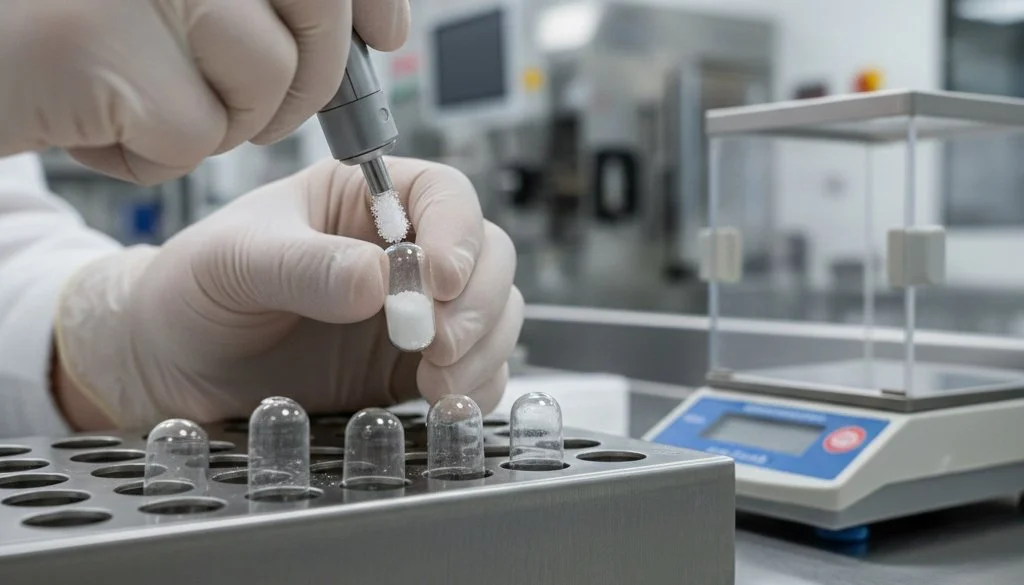
THC powder raises practical production questions regarding application and system integration. The answer depends on formulation goals and manufacturing design. Because it exists in a refined, measurable format, it can be incorporated into structured product systems rather than handled as raw plant material.
The following sections outline typical integration formats used in production.
Use In Food and Beverage Formulations
In structured food and beverage production, THC powder can be incorporated during formulation stages where measured cannabinoid inputs are required. Unlike raw plant material, it does not require grinding or infusion at the point of recipe development. Instead, it is added as a defined ingredient within controlled mixing environments, depending on product design and regulatory requirements. This approach may also support formulation processes used in products such as THC-infused drinks, where measured integration is essential.
Because pure THC isolate is not water-soluble, beverage applications typically require nanoemulsion or dispersion technologies that allow cannabinoids to remain evenly distributed in liquid systems.
Sublingual or Direct Oral Use
Some product formats are designed for placement under the tongue or direct oral administration. In these cases, sublingual THC powder is portioned according to formulation standards before packaging to support consistent integration within that format. This approach differs from baked edible preparation and reflects a separate product category within cannabinoid manufacturing systems.
Encapsulation or Tablet Form
THC powder may also be incorporated into capsules or compressed tablet formats. In these applications, precise measurement and uniform distribution are central to the manufacturing process. The powder form supports portion control during filling or compression, which aligns with structured production workflows that prioritize consistency and batch standardization.
Evolving Manufacturing Standards for THC Powder
As the broader cannabis market grows, companies show increasing interest in alternative product formats and more structured production approaches. This trend reflects not just consumer diversity but also the evolving technical capabilities in formulation and processing that manufacturers are adopting.
These are key trends that shape the format development and production focus in the industry.
Growing Interest in Alternative Cannabis Formats
The global legal cannabis market is estimated to be worth about USD 78.76 billion in 2025, with projections pointing toward continued expansion in the coming years as new product categories emerge and evolve. This broad market growth supports interest in formats beyond traditional flower or extracts as manufacturers explore refined derivatives and controlled inputs within production systems.
Innovation in Formulation Techniques
Formulation methods in the cannabis sector are becoming increasingly structured as manufacturers seek ways to incorporate cannabinoids into diverse product systems with precision. This includes examining how powder formats like THC powder can be integrated into scalable workflows alongside conventional infusion techniques.
Increasing Emphasis on Production Accuracy
With product diversification and more complex formats, attention to production accuracy is rising. Manufacturers place greater focus on reliable measurement, repeatability, and consistency in formulation steps, which helps ensure quality and alignment with regulatory expectations across different product lines.
Driving Consistency and Efficiency in Cannabinoid Production
THC powder reflects how far cannabinoid processing has progressed, from raw plant handling to structured, measurable production formats. As manufacturing becomes more precise, consistency and controlled workflows matter more than ever.
As cannabinoid formats become more refined, the need for precise integration and controlled dosing grows across production environments. While THC powder production involves specialized extraction and formulation systems, downstream processes such as infusion, coating, filling, and measured integration benefit from structured automation.
Sorting Robotics develops systems that support repeatable cannabinoid application in pre roll infusion, kief coating, cartridge filling, and other precision driven workflows, helping manufacturers maintain consistency as product formats evolve.
Frequently Asked Questions
Why is batch consistency critical in THC powder manufacturing?
Batch consistency ensures that each production run aligns with defined concentration and quality standards. Without repeatability, formulation accuracy can shift over time. Stable processes and controlled parameters help maintain uniformity across batches.
What role does automation play in THC powder handling and processing?
Automation can support precise measurement, repeatable transfer, and reduced manual variability in powder handling. Structured systems help maintain controlled conditions during formulation and packaging, which strengthens overall production reliability.
How is potency verified during THC powder production?
Potency is typically verified through laboratory testing that measures cannabinoid concentration and screens for residual impurities. These results confirm whether the material meets defined specifications before it moves forward in the production process.
How does environmental control affect THC powder production?
Environmental conditions such as temperature and humidity can influence powder stability and handling behavior. Variations in these factors may affect measurement accuracy and material consistency. Controlled production environments help maintain reliable processing conditions and reduce avoidable variability during formulation.
What factors influence uniform distribution in powder-based formulations?
Uniform distribution depends on accurate measurement, controlled mixing processes, and consistent particle characteristics. Small inconsistencies during blending or transfer can lead to uneven concentration. Structured workflows and calibrated systems support balanced integration within formulation stages.