
How Cannabis Brands Use Automation to Win Shelf Space in Dispensaries
Dispensary shelf space is not awarded for effort. It is earned through repeatable sell-through, predictable replenishment, and low-risk execution in a category where labeling and packaging errors can turn into quarantines, returns, and reputational drag. Automation matters here because it hardens the part retailers actually experience: the consistency of what shows up in the box, and how confidently it can be received, shelved, and recommended.
That retailer pressure is reinforced at the consumer level. In a 2024 cannabis consumer survey published by the Washington State Liquor and Cannabis Board, 84% of respondents said they read cannabis product labels "often" or "always." When labels are central to the buying decision, dispensaries become less tolerant of preventable variance, misapplied labels, inconsistent fills, seal issues, or anything that creates "extra work" at intake.
Automation helps brands win shelf space by improving the outcomes dispensaries manage every day: in-stock performance, consistent unit quality, scan-and-label confidence, and fewer operational surprises during busy periods. It also protects the point of recommendation by making product performance more repeatable, so budtenders can recommend with confidence, not caveats.
Shelf Space Is a Performance Contract, Not a Marketing Prize
Dispensaries optimize for velocity and reliability. When a product sells consistently and stays in stock, it earns more facings. When it goes out of stock, arrives late, or creates labeling or packaging exceptions, it becomes work, and buyers put it lower on the priority list.
Retail research shows how costly stockouts can be for businesses that rely on consistent availability. A retail stockout study found that out-of-stock situations cost retailers about 4 percent of total sales, meaning a significant share of potential revenue disappears when products are unavailable to customers at the point of purchase.
This is a limited attention environment: buyers expand what performs and reduce what creates friction.
What Dispensaries Are Really Buying
They are buying predictable sell-through with minimal operational friction. The “safe reorder” is the brand that ships on time, fills orders cleanly, and shows up the same way every time on receiving. When buyers can trust replenishment, they can plan promos and manage inventory with less risk.
The Shelf-Space Killers Buyers Remember
Late deliveries, inconsistent units, repeated short-ships, and packaging/label exceptions are the fastest way to lose confidence. Even if the product is strong, these problems steal staff time, create customer complaints, and increase the store's operational burden. Over time, buyers hedge by shrinking facings or switching to brands that feel easier to manage. High-volume brands often implement robotics integration to remove human error from the equation.
How a Brand Earns More Facings Over Time
Facings expand when velocity is steady, and replenishment is predictable. If a brand supports promotions without stockouts and without compliance headaches, buyers make more room because the SKU behaves like a reliable performer, not a recurring exception. Shelf space grows as a byproduct of consistency, not a one-time win.
If my product is great, why do I still lose shelf space?
Because shelf space is awarded for repeatable retail performance, not product potential. Quality is required, but "always in stock, always consistent, easy to receive" is what protects facings in the long term. If operations create friction, the buyer will reduce exposure even when customers like the product.
Automation Wins Shelf Space by Protecting Core Retail Outcomes
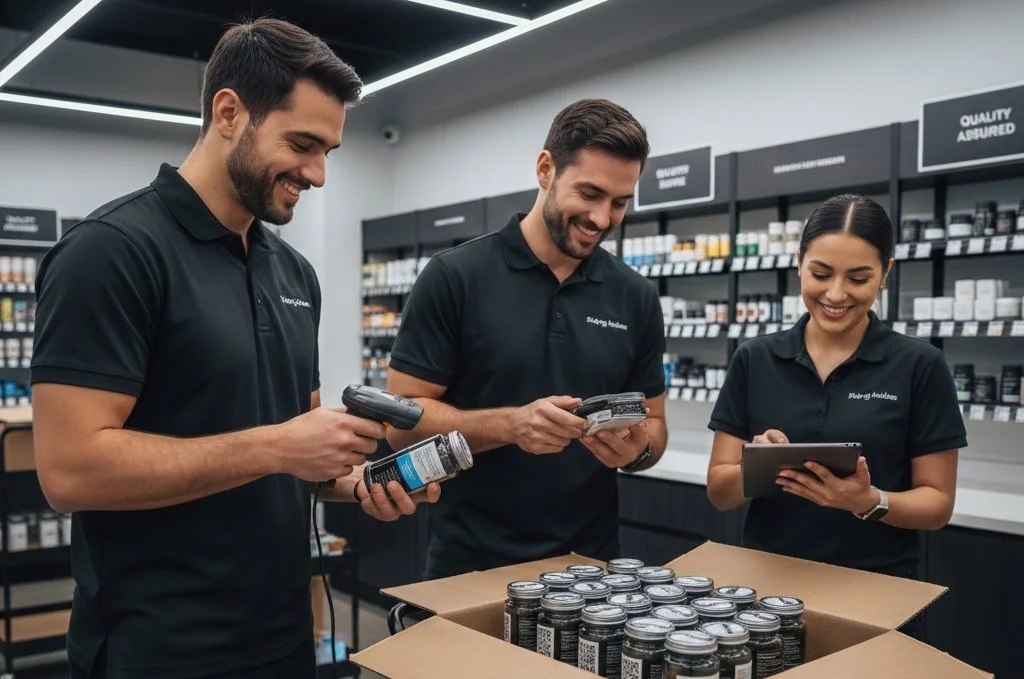
Automation helps dispensaries reorder with confidence by reducing the three risks retailers face: inconsistency, stockouts, and compliance headaches. The value is not “speed for its own sake." The value is repeatable execution that keeps the product moving with fewer exceptions.
Consistency Reduces Complaints and Returns
When fill weights, seals, unit counts, or pre-roll density drift, the store pays for it through complaints, returns, and staff time spent explaining variance. Automated sorting systems, checkweighing, and standardized packaging sequences reduce drift, so the customer experience stays stable.
Predictable Throughput Improves Replenishment Reliability
Retailers reward brands that ship on time and in full, week after week. Automation stabilizes the production rhythm, making ship dates more dependable and reducing “we’ll have it next week” cycles that cause buyers to substitute other brands mid-promo.
Control Reduces Compliance Friction
The shelf-space killers are the events that create doubt: label mix-ups, batch identity mismatches, unclear reconciliation, or incomplete documentation. Automation supports repeatable workflows and consistent checks, so receiving is smoother and the chance of quarantine, pause, or corrective work drops.
Does automation matter more for retail than for production?
Often, yes. The biggest value is often fewer exceptions, because exceptions disrupt dispensary trust and reorder behavior.
Packaging Automation Is Often the Shelf Space Unlock
Packaging and labeling are where SKU complexity, changeovers, and identity controls collide. That is why robotic packaging tends to deliver fast retail impact: it reduces errors, speeds receiving, and increases confidence that what arrives is correct and ready to sell.
Verification Prevents the Errors That Cost Shelf Trust
Automated label verification and checkweigh steps reduce the risk of mislabeling and mismatches. They also reduce the "proof burden" when something looks off, because checks are structured and repeatable instead of ad hoc and memory-based.
Standardization Makes Receiving and Stocking Easier
Consistent packs, labels, and counts reduce questions at receiving and delays in getting product onto shelves. When the store experience is predictable, the product becomes easier to reorder and easier to promote.
Small Automation Moves Can Have Outsized Effects
You do not have to automate everything to see retail gains. Scan-to-verify staging, clear pass/fail checks, and a repeatable reconciliation routine can remove the small daily frictions that quietly slow reorders.
What is the fastest packaging automation win?
A tight loop of checkweigh + label verification + standardized reconciliation. It reduces exceptions quickly and directly increases dispensary confidence.
Automation Supports Budtender Confidence, Not Just Factory Efficiency
Budtenders sell what they trust. Trust is built when the product behaves the same way each time, the package is clean and consistent, and the store is not forced to manage avoidable quality or labeling issues.
Consistency Protects the Recommendation
When automation reduces variance, budtenders face fewer “this batch feels different” conversations. That automated sorting systems protects willingness to recommend the product again and reduces the chance that staff quietly steer customers elsewhere.
Fewer Issues Mean More Enthusiasm
Reliable products create fewer problems for the floor team, fewer complaints, fewer returns, fewer awkward fixes. Over time, that operational ease turns into stronger advocacy and more frequent recommendations.
Reliability Turns Placement Into Permanence
Initial placement can be negotiated. Long-term shelf presence is earned when the product is low-drama: it sells, it stays in stock, and it does not create work for the store.
How does automation show up at the budtender level?
It shows up as fewer complaints, fewer "this batch is different" moments, and fewer returns, so staff feel safer recommending the product.
How Brands Use Automation Strategically to Earn More Facings
The brands that earn shelf space over time do not automate everything at once. They automate the part of the workflow that most directly protects retail reliability, then expand once production runs with a steady rhythm and the automated step can be fed consistently.
This approach keeps automation tied to outcomes dispensaries actually feel: steady replenishment, fewer exceptions, and predictable execution.
Automate the Constraint Before Adding Complexity
Every production line has a point that limits output or introduces the most disruption. In cannabis operations, that constraint is often packaging, verification, or a manual step that creates recurring downtime or errors. Improving the constraint stabilizes supply first, which is what buyers experience as reliability. Adding automation downstream of an unstable step usually shifts problems instead of solving them.
Pair Automation With Disciplined Changeovers and Staging
Automation cannot fix weak staging, missing materials, or loose label control. If changeovers are inconsistent or inputs arrive late, even well-designed equipment will stop frequently or run below capacity. Defined staging rules and repeatable changeover steps allow automated stations to run predictably, which reduces delays and prevents last-minute improvisation that leads to errors.
Integrate QA, So Release Is Routine
When QA and verification are built into the production rhythm, release becomes a normal checkpoint instead of an end-of-shift scramble. Routine checks reduce the risk of mislabeling, identity errors, or documentation gaps that create retail exceptions. Predictable release timing improves ship date reliability, which directly affects buyer confidence.
What is the most common automation mistake?
Buying equipment before stabilizing staging, changeover discipline, and verification routines. In those cases, automation often relocates downtime rather than removing it, and the expected reliability gains never reach the retailer.
The Metrics That Quietly Determine Shelf Space
Dispensary buyers do not need a tour of your production floor or a breakdown of your equipment. They judge brands based on how easy they are to reorder and how safely they can be scaled without creating problems at the store level.
The brands that earn and keep facings treat reliability as a product attribute, not an internal operations metric. They track performance the way retailers experience it: did the product arrive on time, in full, and ready to sell without exceptions.
Reliability Metrics That Actually Drive Reorder Behavior
Buyers respond to operational outcomes, not intent. The metrics that shape reorder behavior tend to be simple, repeatable, and felt directly on the floor:
In stock rate at key accounts, especially during promotions or peak demand
Fill rate, including short shipments and partial deliveries
On-time delivery consistency, not one-off wins
Complaint and return frequency, by SKU and batch
Packaging, labeling, or QA exception rate that creates intake friction or delays
These numbers form the buyer’s mental model of risk. When reliability is high, reorders become routine. When reliability slips, buyers quietly hedge by reducing facings or shifting volume to easier brands.
Use Metrics to Change the Buyer Conversation
When automation improves reliability, the buyer conversation changes tone. It moves away from persuasion and toward confidence.
Instead of “we are improving” or “this was a one time issue,” the conversation becomes “we maintain in stock performance at these volumes” or “our exception rate has dropped below X percent for the last Y months.” That shift matters because buyers expand shelf space when risk feels managed, not when effort is promised.
Metrics turn shelf space discussions from subjective to commercial.
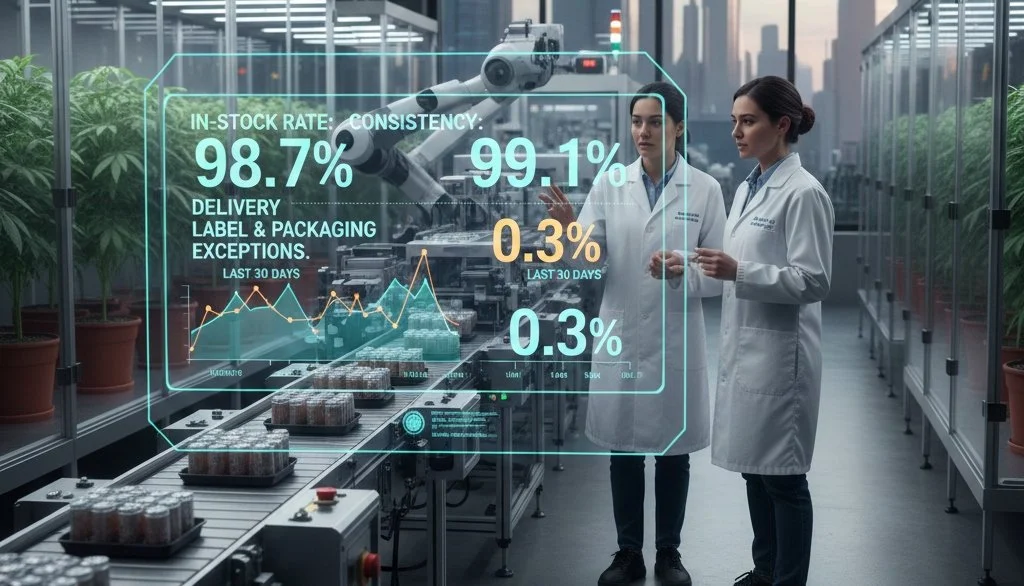
Make Retail Facing Reliability Visible Inside the Operation
Many teams track output, but not impact. Units produced can look strong while shelf presence quietly erodes due to exceptions, delays, or recurring quality issues.
High-performing brands make retail-facing reliability visible internally by tracking:
Exceptions alongside units produced
Root causes behind delays, holds, and rework
Which SKUs generate the most buyer friction
Where automation reduced exceptions, not just labor minutes
This alignment helps improve work target the issues that actually protect facings, rather than optimizing metrics retail never sees.
What should a small brand track first?
Small brands do not need complex dashboards. Start with four numbers that explain most shelf wins and losses:
In stock rate at priority accounts
On-time delivery consistency
Exception rate, including label, packaging, and QA holds
Complaint and return reasons, tracked by SKU
These metrics reveal where automation can have the fastest retail impact and where small reliability gains can unlock disproportionate shelf space growth.
Automation Earns Shelf Space When It Makes It Easier To Buy
Cannabis brands win shelf space when dispensaries trust three things: the product will sell, it will arrive reliably, and it will not create compliance or packaging headaches.
Automation supports all three by reducing variability, stabilizing output, and strengthening control where errors cost the most.
If you want to compete for facings in high velocity dispensaries, treat automation as a retail strategy, not just an operations upgrade. Build a system that produces consistent units, predictable supply, and defensible labeling every week.
Contact Sorting Robotics to evaluate where automation will create the fastest shelf space impact in your workflow, and to design a plan that improves reliability before you scale complexity.
Frequently Asked Questions
Does Automation Matter If My Product Is Already High Quality?
Yes. Shelf space is driven by repeatable performance at retail scale. Automation helps you maintain consistent quality across batches and prevent operational issues that can block reorders.
What Is The Best First Place To Automate In A Cannabis Operation?
Usually, the constraint or the highest-risk point is packaging/labeling verification, fill/weight control, or the station that drives the most downtime and rework.
Can Automation Help With Dispensary Relationships Directly?
Indirectly, but powerfully. Better in-stock performance, fewer exceptions, and fewer complaints make you easier to reorder and easier to promote.
Will Automation Reduce SKU-Change Pain?
It can, if you pair it with standardized changeovers, staged materials, and clear release criteria. Automation without disciplined changeover control often shifts the problem instead of solving it.
Do I Need Robotics To Win Shelf Space?
Not necessarily. Many brands win by automating verification and consistency first, then checkweighing, label verification, controlled staging, and repeatable packaging routines, layering robotics only where it meaningfully increases throughput or reduces handling risk.