
What Is Diamond-Infused Weed? THC Diamonds Explained
Diamond-infused weed refers to cannabis products enhanced with highly concentrated THC crystals, commonly known as THC or THCA diamonds. These crystalline formations are among the purest cannabis concentrates available and are visually similar to gemstones due to their clear, faceted structure.
Cannabis diamonds are typically composed of tetrahydrocannabinolic acid (THCA), a naturally occurring, non-intoxicating cannabinoid found abundantly in raw cannabis plants. According to Cenikor, THCA does not produce psychoactive effects in its raw form; however, when exposed to heat through processes such as smoking or vaporization, it undergoes decarboxylation and converts into THC, the primary intoxicating compound responsible for cannabis’s psychoactive effects.
In commercial markets, diamond products often test between 90% to 99% cannabinoid concentration, placing them among the most potent cannabis extracts available. Because of their strength and purity, diamond concentrates are primarily intended for experienced consumers or controlled product formulations. This guide explains how diamonds form, why they are so potent, and how they are used in infused products.
How THC Diamonds Are Formed
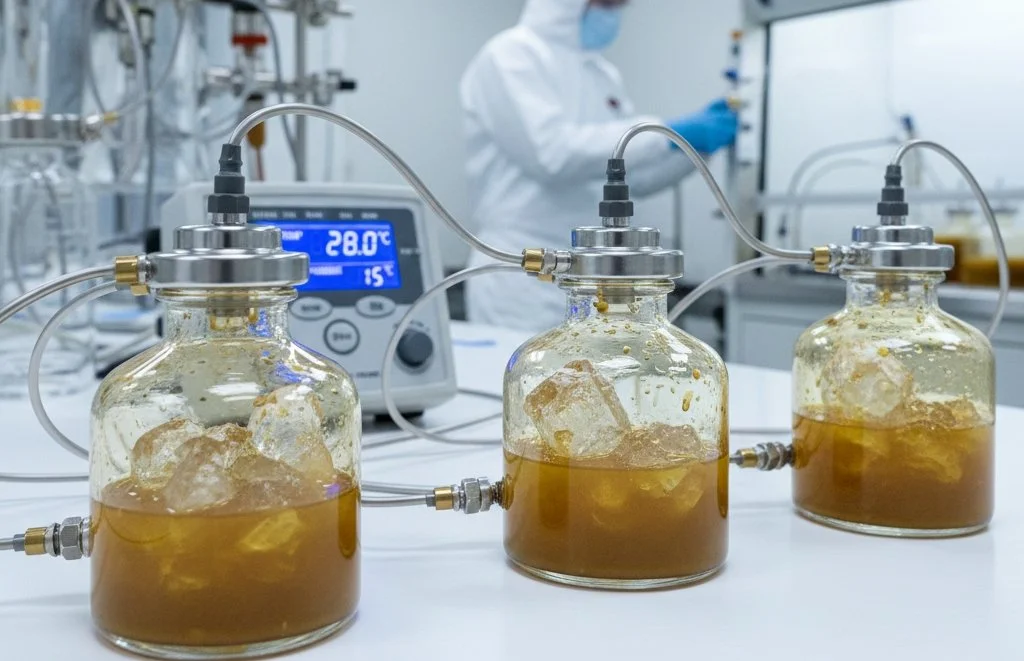
THC diamonds are produced through a controlled extraction and crystallization process designed to isolate THCA from other plant compounds. While techniques vary across licensed production facilities, the underlying principle involves separating cannabinoids and allowing them to reorganize into solid crystal structures.
Extraction and Separation
In professional settings, cannabinoids are extracted from cannabis using regulated solvent-based systems. After extraction, the concentrated solution is refined and prepared for crystallization. During this phase, temperature and pressure are carefully controlled to encourage THCA molecules to separate from other compounds.
Under proper conditions, these molecules gradually reorganize into crystalline formations, resulting in solid THC diamond structures.
Crystallization Process
Crystallization requires stability and time. In some processes, producers begin by freezing a THC solution or adjusting pressure conditions to slow molecular movement. This controlled environment allows THCA molecules to bond in a structured, geometric pattern.
Extended crystallization periods typically support larger, more structurally defined crystal formation. Purity of the starting extract directly impacts clarity and structural integrity.
What determines diamond size and clarity?
Temperature stability, pressure control, and extract purity are the primary factors influencing crystal formation. Impurities or unstable environments can result in cloudy or fragmented crystals rather than clear, well-formed structures.
Why Diamond-Infused Weed Is So Potent
The defining characteristic of diamond-infused weed is its extreme cannabinoid concentration. By isolating THCA from plant material and terpenes, manufacturers create a product with minimal impurities and very high potency levels.
Cannabinoid Concentration
Diamonds frequently test between 90% to 99% total cannabinoid content, depending on refinement quality. This concentration far exceeds that of traditional flower, which typically ranges between 15-30% THC.
Because of this potency, dosage control becomes significantly more important compared to standard cannabis products.
Role of Terpenes
Although raw diamonds are often flavorless, terpenes are usually preserved or reintroduced in certain formulations to enhance aroma and sensory experience. Terpenes contribute to strain-specific characteristics and influence overall product perception.
Products such as “diamond sauce” suspend crystals in terpene-rich extracts to combine potency with flavor complexity.
Do THC diamonds create stronger effects than flower?
Yes. Due to their concentrated cannabinoid content, diamonds can produce significantly stronger effects than traditional cannabis flower. Consumers should assess their personal tolerance level before use to reduce the risk of overconsumption.
Types of Diamond Cannabis Products
Diamond concentrates are available in multiple commercial formats, each designed to balance potency, terpene preservation, and method of consumption. While all diamond products contain highly concentrated cannabinoids, their structure and formulation determine how they perform during use.
THCA Diamonds
THCA diamonds are isolated crystalline structures composed primarily of tetrahydrocannabinolic acid. In their raw state, they are non-intoxicating; however, when exposed to heat through dabbing or vaporization, THCA undergoes decarboxylation and converts into THC.
These crystals are typically clear to translucent and contain minimal terpene content, prioritizing purity and potency over flavor complexity.
Diamond Sauce
Diamond sauce combines THCA crystals with a terpene-rich extract, often referred to as “high-terpene extract” (HTE). This formulation preserves aromatic compounds while maintaining high cannabinoid concentration.
By suspending crystals in liquid terpenes, diamond sauce delivers both intensity and strain-specific flavor, making it a preferred format for consumers seeking a balanced sensory and potency profile.
Diamond-Infused Cartridges and Pre-Rolls
Diamond concentrates are increasingly incorporated into vapor cartridges and infused pre-rolls to elevate THC percentages beyond standard flower levels. In cartridges, refined diamond extract is blended with terpene fractions for vaporization compatibility.
In infused pre-rolls, crushed diamonds are layered or blended with flower, significantly increasing cannabinoid density while maintaining a familiar combustion-based consumption method.
Are diamond products suitable for beginners?
Diamond concentrates are generally recommended for experienced consumers due to their high cannabinoid concentration. Individuals with lower tolerance should begin with standard flower or lower-potency extracts before transitioning to diamond-based products to reduce the risk of overconsumption.
Consumption and Safety Considerations
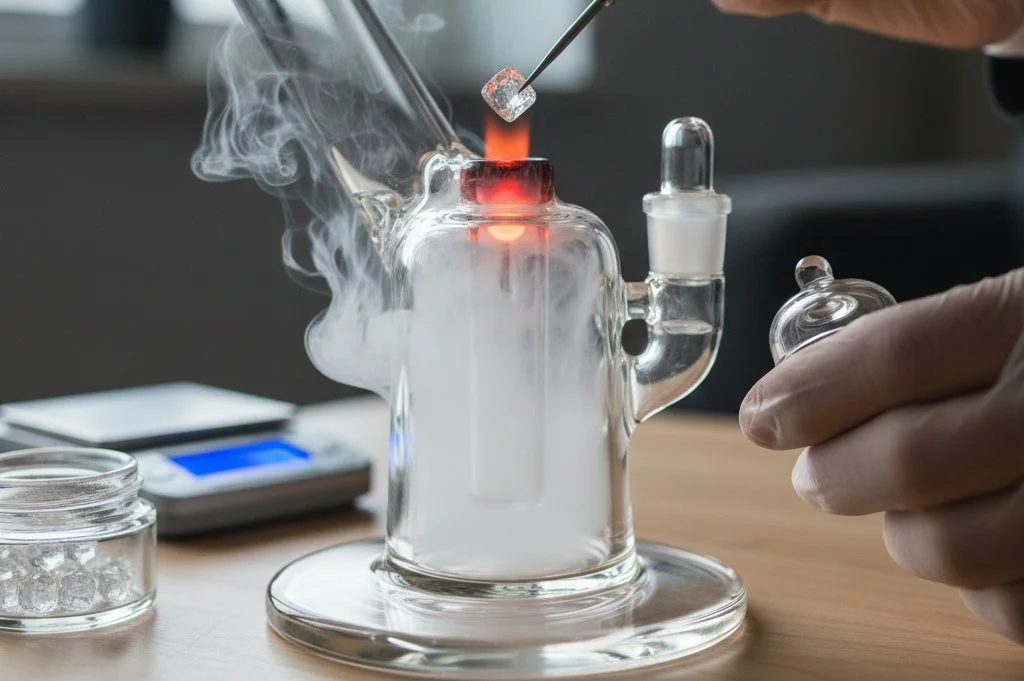
Due to their exceptionally high cannabinoid concentration, diamond products require deliberate consumption practices and proper handling. Even experienced users should approach diamond concentrates with precision, as potency levels can significantly exceed traditional flower or standard extracts.
Dabbing and Vaporization
Diamonds are most commonly consumed through dabbing or vaporization, both of which apply controlled heat to convert THCA into THC via decarboxylation. Because these methods involve direct thermal activation, temperature management plays a critical role in performance.
Excessive heat can degrade cannabinoids and volatile terpenes, while controlled temperature ranges preserve vapor quality, flavor integrity, and overall consistency.
Dosage Awareness
Diamond concentrates are highly concentrated, meaning very small quantities can deliver substantial psychoactive effects. Unlike flower, where dosing is distributed across larger material volume, diamonds provide dense cannabinoid delivery in minimal mass.
Starting with conservative amounts allows users to assess individual response, particularly when tolerance varies or when combining with other cannabis products.
Why is dosage control especially important with diamond concentrates?
With cannabinoid concentrations frequently exceeding 90% THC, even a fraction of a gram may produce effects significantly stronger than conventional cannabis flower. Gradual consumption reduces the likelihood of overwhelming psychoactive responses, including anxiety, impaired coordination, or acute intoxication.
Diamond-Infused Weed in Commercial Production
In regulated cannabis markets, diamond concentrates are strategically incorporated into infused products to develop high-potency SKUs with measurable cannabinoid consistency. Because diamonds can exceed 90% purity, even minor formulation errors may significantly impact final potency. As a result, licensed manufacturers rely on tightly controlled extraction environments and standardized crystallization protocols to maintain compliance and product integrity.
Formulation Precision and Compliance
Diamond integration requires accurate cannabinoid quantification and uniform dispersion within the final product matrix. Whether blended into pre-rolls, cartridges, or concentrates, uneven distribution can create potency variance and regulatory risk. Laboratory validation, batch testing, and documented formulation procedures are essential to ensure label accuracy and consumer safety.
Automation and Scalable Manufacturing
As production volume scales, manual handling introduces dosing variability and increased compliance risk. Many commercial operators implement automated infusion, blending, and coating systems to improve repeatability and reduce cannabinoid waste. Precision automation supports tighter THC tolerances, higher throughput capacity, and improved batch-to-batch uniformity.
Why is precision manufacturing critical for diamond-infused products?
Due to the extreme potency of diamond concentrates, small deviations in formulation can produce disproportionate potency fluctuations. Precision manufacturing ensures consistent cannabinoid distribution, regulatory compliance, and scalable production without compromising product performance.
Upgrade Your High-Potency Production Line
As the premium concentrate category continues to evolve, long-term success will rely on more than headline THC percentages. Brands producing diamond-infused pre-rolls or other high-potency products must focus on consistent dosing, even cannabinoid distribution, and repeatable manufacturing processes. With concentrates that can test above 90%, small formulation errors can create large potency variations.
For operators looking to scale diamond-infused pre-roll production, automated infusion systems can improve precision and reduce variability compared to manual workflows. Solutions like the Jiko platform from Sorting Robotics are designed to deliver accurate concentrate placement and controlled dosing across high-volume runs. This supports batch consistency, compliance accuracy, and stronger product uniformity.
If your team is preparing to expand into high-potency infused formats, exploring automation can help streamline production while maintaining strict quality standards. Visit SortingRobotics.com to learn more about available infusion systems and schedule a demo.
Frequently Asked Questions
What is the difference between THC diamonds and THCA diamonds?
THCA diamonds contain tetrahydrocannabinolic acid, the non-psychoactive precursor to THC. When heated through dabbing or vaporization, THCA converts into THC, producing intoxicating effects. In commercial markets, the terms are often used interchangeably.
How strong are diamond concentrates compared to flower?
Diamond concentrates significantly exceed the potency of traditional cannabis flower, delivering substantially higher cannabinoid density in smaller quantities.
Do diamonds contain terpenes?
Pure THCA diamonds contain minimal terpene content. However, formulations such as diamond sauce reintroduce terpene-rich extracts to enhance aroma, flavor, and strain-specific characteristics.
What is the safest way to consume diamond-infused products?
Controlled vaporization or dabbing at regulated temperatures allows precise activation of cannabinoids. Users should begin with small amounts and gradually increase based on individual tolerance.
Are diamond-infused products regulated?
In licensed cannabis markets, diamond concentrates must undergo laboratory testing for potency, purity, and residual solvents. Compliance standards vary by jurisdiction, but typically require strict quality control and labeling accuracy.